 +919325609388


If you’ve been waking up at night with a stiff, aching shoulder that just won’t move freely, you’re likely dealing with frozen shoulder — medically known as adhesive capsulitis. The good news? Yes, frozen shoulder exercises can genuinely help. Done consistently, the right movements reduce pain, restore range of motion, and speed up recovery.
In this blog, we’ll walk you through 5 frozen shoulder exercises for quick relief that you can start doing today — at home or with guidance from our physiotherapists at Healyos.
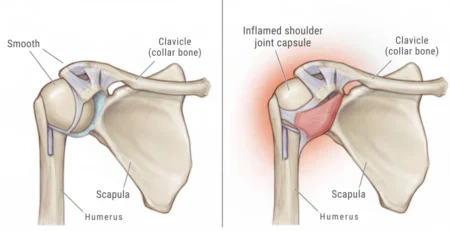
Understanding Frozen Shoulder Before You Exercise
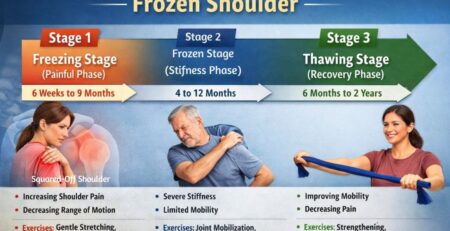
Frozen shoulder progresses through three stages — freezing (painful), frozen (stiff), and thawing (recovery). Most people seek help during the frozen or thawing stage, which is actually when exercise becomes most effective.
Whether you’re a homemaker, a desk-worker, or someone returning to activity after injury, these exercises are suitable for both men and women. In fact, woman frozen shoulder exercises are increasingly searched online because women between the ages of 40 and 60 are disproportionately affected by this condition.
Before starting, a quick note: if your pain is severe, please consult a physiotherapist before attempting any exercise. At Healyos, we offer both clinic-based and at-home physiotherapy sessions in Pune, so getting professional guidance has never been easier.
5 Best Frozen Shoulder Exercises for Pain Relief and Recovery
These exercises are designed to gently mobilize your shoulder joint, reduce stiffness, and gradually rebuild strength. Always warm up first with a warm compress or a gentle 5-minute walk.
1. Pendulum Stretch — The Classic Starter
The pendulum stretch is one of the safest and most recommended exercises for frozen shoulder pain, especially in the early stages.
How to do it:
- Stand next to a table and lean forward, resting your unaffected arm on the surface for support.
- Let your affected arm hang loosely.
- Gently swing your arm in small circles — clockwise for 30 seconds, then counterclockwise.
- Gradually increase the size of the circles as your comfort allows.
Do: 2–3 sets, once or twice a day.
This exercise uses gravity rather than muscle force, which makes it ideal when even lifting your arm feels difficult.
2. Cross-Body Shoulder Stretch — For Everyday Flexibility
This is one of the most practical frozen shoulder exercises at home because it requires no equipment and can be done sitting or standing.
How to do it:
- Use your unaffected arm to gently lift your affected arm at the elbow.
- Pull it slowly across your chest.
- Hold for 15–30 seconds. You should feel a gentle stretch, not pain.
- Release slowly and repeat.
Do: 3–5 repetitions per session.
This stretch targets the posterior capsule of the shoulder — an area that typically tightens significantly in frozen shoulder patients.
3. Towel Stretch — Regain Your Reach
The towel stretch is a favourite among physiotherapists for improving internal rotation, which is often one of the most limited movements in frozen shoulder.
How to do it:
- Hold a small towel or cloth behind your back — one hand above from behind the neck, one hand below from behind the waist.
- Use your good arm to gently pull the towel upward, which will encourage your affected arm to rise.
- Hold for 15–20 seconds, then release.
Do: 10–15 repetitions daily.
This is especially helpful for women who find daily tasks like fastening a bra or reaching into back pockets painful or impossible.
4. Wall Climbing (Finger Walk) — A Gentle Range-of-Motion Builder
Wall climbing is one of the best exercises for frozen shoulder when you want to safely work on raising your arm overhead without straining the joint.
How to do it:
- Stand facing a wall, about an arm’s length away.
- Place the fingertips of your affected arm on the wall at waist height.
- Slowly “walk” your fingers up the wall as high as you comfortably can.
- Hold the highest point for a few seconds, then slowly walk back down.
Do: 10–20 repetitions, once or twice daily.
Track your progress by marking your highest point on the wall each week — you’ll be surprised how quickly you improve with consistency.
5. Isometric Shoulder Strengthening — Build Without Straining
Once your pain begins to settle, it’s important to transition from mobility exercises to frozen shoulder strengthening exercises. This is where recovery truly accelerates.
Isometric exercises involve contracting your muscle without moving the joint — making them perfect for early-stage strengthening.
How to do it:
- Stand next to a wall with your elbow bent at 90 degrees.
- Gently press the back of your wrist into the wall as if you’re trying to push it outward — but don’t actually move your arm.
- Hold for 5 seconds, relax, and repeat.
- Do the same with the inside of your wrist pressing toward the wall.
Do: 10 repetitions on each side, 1–2 times daily.
This strengthening exercise for frozen shoulder helps rebuild the rotator cuff muscles and prepares your shoulder for more active movement as you progress.
Tips to Get the Most Out of Your Frozen Shoulder Exercise Routine
- Consistency beats intensity. Gentle daily exercises will always outperform aggressive, occasional ones.
- Apply heat before and ice after. A warm compress before loosens the joint; ice after reduces any inflammation.
- Never push into sharp pain. Mild discomfort is okay; sharp or shooting pain is a signal to stop.
- Track your progress. Note your range of motion weekly — even small improvements are meaningful.
- Combine exercises with professional physiotherapy. At Healyos, our physiotherapists in Pune design personalized recovery plans that combine manual therapy with guided home exercises for faster results.
When to See a Physiotherapist
If you’ve been doing frozen shoulder exercises at home for 3–4 weeks without any noticeable improvement, or if your pain is getting worse, it’s time to seek professional help. Frozen shoulder can take months to resolve on its own — but with targeted physiotherapy, recovery timelines can be significantly shortened.
At Healyos Physiotherapy, we understand how much a stiff shoulder can affect your daily life — from dressing yourself to sleeping comfortably. Our team offers both clinic visits and home physiotherapy sessions across Pune, so you get expert care wherever is most convenient for you.
Key Takeaways
- Frozen shoulder is a common but treatable condition that responds well to consistent, gentle exercise.
- The 5 exercises covered — pendulum stretch, cross-body stretch, towel stretch, wall climbing, and isometric strengthening — address both mobility and strength.
- Always progress from gentle mobility work to strengthening as your pain reduces.
- Home exercises are effective, but combining them with professional physiotherapy gives you the best and fastest results.
- Women aged 40–60 are most commonly affected, but these exercises are suitable for anyone dealing with shoulder stiffness.
Frequently Asked Questions (FAQs)
Q1. How long does it take for frozen shoulder to heal with exercises?
Recovery varies by stage and consistency. With regular physiotherapy and exercises, most people see significant improvement within 3–6 months. Without treatment, frozen shoulder can last 1–3 years.
Q2. Is it okay to exercise a frozen shoulder every day?
Yes — gentle mobility exercises can and should be done daily. However, strengthening exercises may need rest days in between. Your physiotherapist can guide the right frequency based on your stage of recovery.
Q3. Can frozen shoulder come back after it heals?
Recurrence in the same shoulder is rare. However, people who’ve had frozen shoulder in one shoulder have a 20–30% chance of developing it in the other shoulder at some point.
Q4. Should I use heat or ice for frozen shoulder?
Heat is generally more helpful for frozen shoulder because it relaxes the stiff joint capsule. Apply a warm compress for 10–15 minutes before exercises. Ice can be used afterward if there is any swelling or inflammation.
Q5. Can I continue working while recovering from frozen shoulder?
In most cases, yes — with some modifications. Avoid heavy lifting, overhead activities, or repetitive arm movements that trigger pain. An ergonomic assessment of your workstation can also make a significant difference during recovery.

Leave a Reply